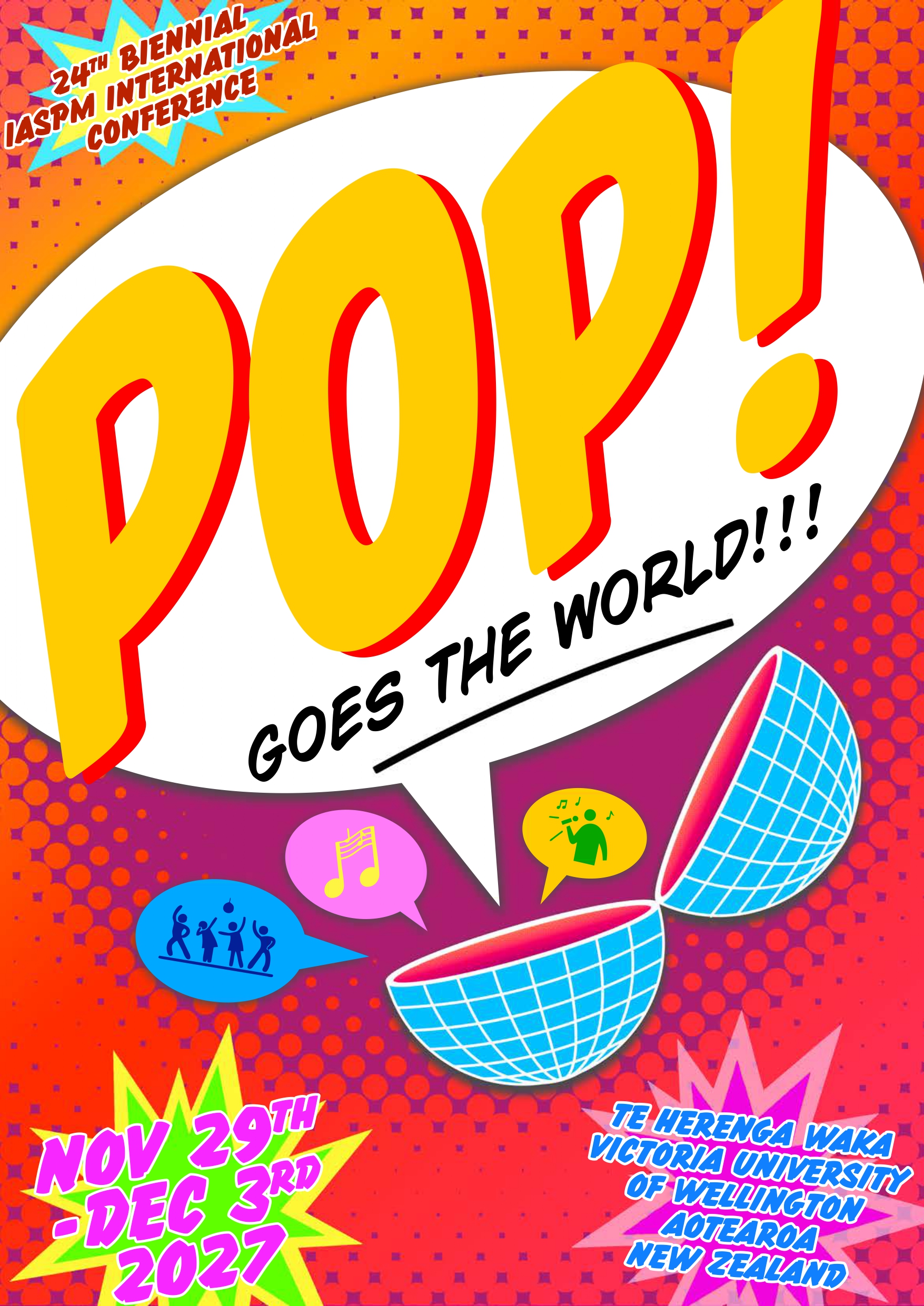
XXIII IASPM Biennal International conference, Paris (France)

Featured

https://iaspm-paris2025.sciencesconf.org/?lang=en

Recording popular music

IASPM 23rd international conference

Organized by Iaspm-branche francophone d’Europe and Sorbonne Nouvelle University, Paris, France

    Recording played a central role in the establishment of the field of popular music research in the 1970s and 1980s: at a time when popular music studies was gaining traction as a field of study, the specific status of recording made it possible to distinguish three areas of study: popular music, art music and folk music.

    Recording has also been seen as a symptom and a variable in the development of the music business. Having become a reproducible commodity, music evolved in new directions when, towards the middle of the 20th century, the record became the main medium of the music industry. At the same time, recording made music available for distribution across a broad range of media, including radio, cinema and later television and then the Internet. In the present era of the domination of streaming platforms in the consumption of popular music (known as “platformisation”), music rights and the creation of catalogues are taking on major importance for the cultural industries and the digital economy. 

    The recorded medium, as a reproducible asset, is also becoming something that can be preserved, archived and restored (republished) as media change. In addition to commercial aspects – the renewing of home equipment, the sale of augmented editions, alternate takes, and so on – there is a creative dimension involved. Recordings can be a medium for creation (for example in the practices of turntablism, dj-ing or sampling), as well as having a heritage dimension (recordings can be traces or treasures of the past). 

    The analysis of recordings as ‘texts’ of popular music has naturally been one of the main areas of research over the last forty years. This type of analysis, applicable to all recorded music, also has the advantage of problematising the barriers between musical meta-genres and blurring the boundaries between categories applied, sometimes too rigidly, to music.

    Research into music production and studio techniques has also seen considerable development over the last few decades. Scientific literature has long emphasised the importance of  the recording studio as a technical and artistic tool (the studio as musical instrument), as well as as a place of interaction, and an economic focal point, at the crossroads of the practical, the technical, the aesthetic and the social, with very specific characteristics in terms of space and time. It is also a place where certain production relationships have been seen to change. If we consider, for example, the relationship between musicians and production intermediaries, whose status has developed throughout the history of the recording studio. More recently, the growth of home studios since the 1980s has opened up new social and economic horizons. Here we might also mention creative revolutions: the composition-performance-production continuum, the central role of recording, the questioning of the status of the author/performer, and so on.

    New questions have come into play in the recording of popular music in recent years, and research has expanded to take in other, more contemporary, perspectives. These include postcolonial studies: how is music recorded around the world? Gender studies: how do recording practices reflect or shift power relations and gender stereotypes? Ecological issues also arise, through the question of the environmental footprint of recorded music, whether produced on physical media or in digital format.

    Moreover, in recent years, there has been a renewal of scientific curiosity regarding concerts and live performance as a central element within music production, as distinct from recordings. How distinct or different are they? It is often thought that the notion of live performance only exists because recordings dominate, and that the concept of liveness has only developed in relation to recordings, which are themselves mediated music.From an aesthetic and ontological point of view, there is a continuum between live music and recorded music (for example, when recorded music becomes the basis for new compositions or is used on stage). Cases range from hip-hop and trip-hop to electronic music; and beyond these, what should be said about the role of computers, artificial intelligence and the automatic production of recordings, in concerts and on record, and how these practices will evolve in the future?

    The revival of research on live performance parallels the re-emergence of the concert as the focal point of the music economy, in contrast to the situation in the second half of the 20th century, when live performance was little more than a means of promoting recordings and attracted little academic attention. We can therefore assume that the current interest in live music stems from the crisis in sales of recorded music seen in the first fifteen years of the 21st century. But more recently, with the advent of the global public health crisis from 2019 to 2022, the impossibility of going on stage or to a concert shook up live music habits and initiated new thinking and research into the live/recording bipolarity.

    There exists another aspect, and it is one of the most important: beyond recording as a process involving studios or various pieces of technical equipment, our conference is an invitation to look at the recording of popular music in global and cultural terms. Recording means keeping traces or tracks, a practice which can also be understood in a broader, anthropological sense: how are the traces kept or preserved? How are they also sometimes erased? How is socio-cultural diversity “recorded” or not in popular music? What role do field recordings play in this process? What is the logic behind this rendering invisible or this preservation, which facilitate the accessibility of certain genres or repertoires over others? How does the recording of music contribute to its semanticisation, its representation, the shaping of musical genres and the establishment of their aesthetic, economic, political, cultural and social value?

    The difference between musical genres is also in evidence in their relationship to recording. Here we see the tension perpetually created in popular music by the notion of authenticity, which varies according to popular music genre and often comes into play in the relationship between recording and live performance. The values associated with a live sound in recording are not therefore the same in all genres. This has an impact on recording techniques, and on the various illusions that such techniques are called on to create, or not, when they aim to obfuscate the fact that recording is always an artefact.

    How recordings are received and listened to is also a factor here: how do communities – audiences, but also critics and other professionals – judge recorded music? According to what criteria? Recording techniques have in turn led to changes in tastes, sensibilities, listening styles and habits. We have seen that the development of records as the predominant format for the consumption of music led to a habituation to sounds worked on in the studio and a resultant increased attention to timbre, for example. Listening has evolved in step with the habits and behaviours made possible by recorded music and its various formats, which are central to popular music. This also feeds into recent questions raised by sound studies and media archaeology in terms of soundscapes, sound archives, musical heritage and sound beyond music.

    The IASPM 2025 biennial conference invites the exploration of these questions across all popular musical genres, emphasising their multidisciplinary nature, a key characteristic of popular music studies. Perspectives are welcome from anthropology, economics, sociology, aesthetics, musicology, history, and political fields, from technical studies, etc. This list is not exhaustive, and the intention is also to encourage cross-fertilisation between all possible approaches to the subject. Proposals may fall within the following areas, without excluding other topics, as long as they correspond to the theme of the conference:

  • Recording as a medium
  • From recording to data and the predominance of streaming platforms (“platformisation”) in the consumption of popular music
  • Recording and liveness, recording and performance
  • Recording as a technique: equipment, media, electronic and digital technologies in signal processing
  • The recording studio and its different formats
  • Recording in sound studies
  • Recording practices and mediations, the status of intermediaries
  • Recording and related rights, remuneration models, international conventions
  • Recording and artificial intelligence
  • Recording and gender studies
  • Recording popular music and global cultural diversity. Traces or erasures of cultural diversity
  • Recorded music as heritage in exhibitions and museums
  • Recording and the music economy, the commodification of music
  • Sound recording as an investigative technique and/or as writing
  • Recording as a text for analysis
  • Recordings and their reception: how is recorded popular music listened to? What categories of evaluation are there? What are the links between recording and musical genres? 
  • Uses of recordings and dance practices

Submission

We invite abstracts, in English or in French, between 250 and 300 words, alongside a short list of bibliographical references (and/or sources if applicable). Please specify in which of the thematic areas the presentation falls (maximum three), and include a short bio-bibliography of the author, as well as specifying their IASPM branch

The abstract should be submitted on this page: https://iaspm-paris2025.sciencesconf.org/submission/submit 

Submissions will be accepted until October 30th, 2024.

Each participant must be a member of a branch of IASPM: www.iaspm.net/how-to-join

Individual paper presentations are 20 minutes long, to be followed by a 10 minute discussion.

Some sessions will be broadcast online. However, remote participation will not be possible.

Proposals for organised panels are encouraged (ninety minute sessions with three papers, or two papers and a discussant). Each session should leave at least 30 minutes for discussion or for comments by a discussant immediately following the presentations. The panel organiser should submit the panel abstract and all individual abstracts (250-300 words each) in one submission, with a full list of participant names, their biography and their IASPM branch.

EXTENDED DEADLINE! CFP: EUPOP 2026 – Spectacle Revisited

EXTENDED DEADLINE! CFP: EUPOP 2026 – Spectacle Revisited
Satakunta University of Applied Sciences (SAMK), Pori, Finland, July 1–3, 2026

Individual paper and panel contributions are invited for the thirteenth annual international conference of the European Popular Culture Association (EPCA), to be held at Satakunta University of Applied Sciences, Pori, Finland, July 1–3, 2026.

The theme of the conference is Spectacle Revisited. Returning to Guy Debord’s widely cited work The Society of the Spectacle, the conference welcomes contributions addressing the spectacular—that is, the mediatization of cultural forms, (mega)events, performance, and the allure of “the popular.” In line with the conference’s main theme, particular emphasis will be placed on the production and remediation of events, including music festivals, sports events, blockbuster films, and exhibitions. In addition, the organizers encourage proposals exploring fans and fan communities as producers, interpreters, and challengers of the spectacular. Other possible themes include rethinking the spectacular in the digital age, especially the new expressions and aesthetics brought forth by the rapid development of open-access, easy-to-use AI tools. The aforementioned topics, however, are not exclusive, and the organizers also welcome proposals within the broader popular cultural framework, including—but not limited to—media, fashion, celebrity culture, and popular literature and comics.

All individual papers and complete panels will be subject to peer review. Proposals for individual presentations should be suitable for 20-minute papers; panel proposals are limited to 90 minutes in total. For panel proposals, please provide a short description of the panel along with individual abstracts. Poster presentations and video projections are also warmly welcomed.

There will be opportunities for networking and publishing within the EPCA. Presenters at EUPOP 2026 will be encouraged to develop their papers for publication in several Intellect journals, including the EPCA’s Journal of European Popular Culture. Journal editors will work closely with strand convenors. A full list of Intellect journals is available at: http://www.intellectbooks.com.

Proposals—consisting of a maximum 300-word abstract, your full name, affiliation, and contact details (as a Word file, not a PDF)—should be submitted to Dr. Kimi Kärki (kimi.karki@uniarts.fi) by Tuesday 31 March 2026. Receipt of all proposals will be acknowledged by e-mail. The draft conference programme will be announced in May 2026, along with registration and accommodation details. The conference fee will be 200 euros (students) and 250 euros (others). The fee includes coffee breaks, lunches, an evening reception and dinner, and EPCA membership (including one sample issue of the Journal of European Popular Culture, Intellect Books). For information about fee payment, please contact EPCA Treasurer Tommi Iivonen (ttiivo@utu.fi).

EUPOP 2026 keynote speakers:

Professor Emeritus John Clarke (Open University, UK)
Professor Martin Cloonan (Turku Institute for Advanced Studies, Finland)

The European Popular Culture Association

The European Popular Culture Association (EPCA) promotes the study of popular culture from, in, and about Europe. Popular culture involves a wide range of activities, material forms and audiences. EPCA aims to examine and discuss these different aspects as they relate both to Europe and to Europeans across the globe, whether contemporary or historical.

EUPOP 2026 is organised by:

European Popular Culture Association (EPCA): https://epcablog.wordpress.com/

International Institute for Popular Culture (IIPC): http://iipc.utu.fi/

Degree Programme in Digital Culture, Landscape and Cultural Heritage (University of Turku, Pori University Consortium)

Research project Pori Jazz – Makers, Places, and Heritage (University of Turku, dir. Petri Saarikoski)

EPCA President, Kimi Kärki, kimi.karki@uniarts.fi

EPCA Vice-President, Pamela Church Gibson, pamelachurchgibson@gmail.com

EPCA Secretary, Anna Peltomäki, ankpel@utu.fi

EPCA Treasurer, Tommi Iivonen, ttiivo@utu.fi

EPCA Membership Secretary, Graham Roberts, graham.roberts@univ-lille.fr

Pori

Pori is a coastal city in western Finland. The city sits along the Kokemäenjoki River and hosts major annual events such as the internationally recognized Pori Jazz Festival. Pori combines a strong industrial heritage with growing strengths in technology, sustainability, and creative industries. The city is reached by regular bus and rail connections from major Finnish cities, including Helsinki and Tampere. The conference venue is located within a walking distance of the city center.

Postdoctoral announcement

he School of Music, Theatre and Art at Örebro University in Sweden is now inviting applications for the following research postdoc in musicology: https://www.oru.se/english/career/available-positions/job/?jid=20250112

The postdoc is tied to the project Musical Cultural Heritage: Power and Resilience in Crisis and Conflict. The project aims to explore music’s role as both a propaganda tool as well as a means for building solidarity during contemporary crises (e.g. war, geopolitical conflict, the rise of authoritarianism).

The deadline for applications is May 16th 2025.

Please read more about research at the department here: https://www.oru.se/english/schools/music-theatre-and-art/research/

Hands on Sonic Skills

Practical experiential approaches to sound, music, and media in musicological education

Conference on December 11 & 12, 2025

Martin-Luther-University Halle-Wittenberg, Department of Musicology

Keynotes: Andreas Fickers and Joanna Szczepańska-Antosik

Call for Papers / Abstract

Media and technologies for synthesis, recording, processing, and distribution of sound have become important subjects of music research. Examples include the history of sound recording (Sterne 2003, Katz 2010, Horning 2013, Bennett 2019), the significance of technical devices in music scenes (Theberge 1997, Butler 2014, Herbst/Menze 2021), or musical analysis oriented toward sound and music production processes (Zagorsky-Thomas 2016, Hepworth-Sawyer et al. 2019).

Across the intersection of musicology, media studies, sound studies, and other disciplines, new disciplinary branches such as Music Production Research (Bennett & Bates 2019; Bourbon & Zagorski 2020) have emerged, which have developed their own theoretical approaches and methods for researching recorded and technically mediated music. Today, knowledge of audio-technical processes and a sensory sensitivity for the design of sound are no longer regarded merely as engineering expertise, but as part of cultural practices that shape musical activity from the ground up and must therefore also be part of musicological questions and knowledge.

Such knowledge is often implicit, ‘tacit knowledge’ and therefore observable as practice or musical action. Therefore, ethnographic, praxeological, and artistic research methods are particularly frequently applied in this field, for example in the form of field research (Bürkner 2013; Bates 2017; Huschner 2016), reenactments (Fickers/van den Oever 2022; Meynell 2017), and media experiments in artistic research (Badura et al 2015, van der Heijden/Kolkowski 2023). These approaches suggest that in many cases observations informed by one’s own experiential practical approaches aid in gaining a deeper understanding of media-cultural-musicological phenomena.

This shift is also taking root in musicological teaching, for instance in new chairs, module regulations, and degree programs. At locations such as Bonn, Oldenburg, Berlin (HU), Lüneburg, Hildesheim, and Halle (Saale), as well as in London, Agder, Huddersfield, or Concordia, recording studio technology, synthesizers, DIY electronics, and Digital Audio Workstations are becoming essential elements of musicological education. The practical engagement with sound and its production contexts ranges from the history of the tape recorder to introductory courses in miking and mixing techniques to listening sessions that focus on the sonic design of ›produced music.‹ This engagement often takes place in university-owned recording studios. These ›toolscapes‹ of music production prove to be particularly suitable places for practice-oriented learning. (King & Hemonides 2016).

The conference brings together a cross-section of materially and practically oriented research and teaching and offers space for discussions on how current scientific and didactic approaches can benefit from each other.

This raises the following questions:

(1) Which basic practical sound knowledge should be part of a musicological education? What is the relationship between scientific (musical acoustics) and music-psychological approaches (sound perception, auditory physiology) and research centered on cultural aspects such as sound studies or pop musical analysis? What forms of implicit or ›embodied‹ knowledge, what practical abilities in handling analog and digital audio technology, and what systematic training of technical hearing or critical listening skills are required for sound and music analysis today?

(2) How can these contents be integrated into the framework of academic education in a contemporary and didactically meaningful way without becoming too superficial or too specialized? What role does the relationship between in-person teaching and digital learning offerings play? What methods and ideas for seminar or semester structures exist? We will present our own procedures and learning formats in the beta version of our hybrid teaching platform METRONOM, on which, in addition to a module for technical ear training for musicologists, we provide material and instructions for the experiential-practical teaching of sound (technologies) and music media works in classroom teaching, especially in forms of re-enactment.

(3) How relevant are sound and media technologies as aspects of musical design not only for contemporary musicological education but also for practice-oriented professional fields? What knowledge is required in journalistic fields such as radio, press, and online media, in curatorial and museal contexts, in concert and theater, archives, publishing, and music management?

(4) How should the recording studio be set up as a learning space for musicology? How can it help students gain a deeper understanding of production processes in the context of sound technologies without overloading the learning process? Which ‘toolscapes’ offer inspiring environments for sound-related project work? What didactic as well as practical-technical challenges should be considered in this special learning environment?

We invite you to submit proposals for individual presentations, panels, workshops, and posters related, but not restricted to, the following topics:

·        Technical ear training / Critical listening skills

·        Musical applications of recording technology

·        Handling of time- and style-specific devices and production environments (Multitrack, MPCs, Push, etc.)

·        Elaboration and performance of electroacoustic and experimental music in teaching

·        Experiential/practical approaches in sound studies

·        Artistic research in music and sound art

·        Modular synthesizers in teaching

·        Sound description and language in music analysis

·        Use of digital tools in musicological sound and music analysis (Sonic Visualizer, etc.)

·        Realization/production of recordings as student research in the studio

·        Hybrid formats and use of digital learning platforms

·        Higher education didactic methods related to audio technology

·        Historically and culturally comparative perspectives on the above questions

We explicitly understand ›Hands on Sonic Skills‹ as a learning, working, and workshop conference. Therefore, we ask you to consider organizing workshops (60-90 min) focusing on special teaching methods or topics, in addition to classical presentations (20 min + 10 min discussion) and joint panels (90 min). A poster session will provide the opportunity to exchange ideas about methods, didactics, and individual student projects. Smaller technical experiments and setups are explicitly encouraged.

The conference is organized as part of the educational research project METRONOM – Media Transformation of Musical Knowledge (2024-2026). Funding is provided by FREIRAUM financed by the BMBF and administered by the Foundation for Innovation in Higher Education (STIL). The conference is organized at the research section Music and Media, headed by Prof. Dr. Golo Föllmer. Team: Alan van Keeken, Sebastian Schwesinger, Lukas Iden, and Katja Lux.

Conference languages are German and English. Participation is free of charge.

Please send your abstract (max. 400 words) and CV (max. 100 words) by April 30, 2025, indicating your preferred format, to alan.van-keeken@musikwiss.uni-halle.de

Literatur/e:

Badura, Jens et al (2015): Künstlerische Forschung. Ein Handbuch, Zürich/Berlin.

Bates, Eliot (2016), Digital tradition: Arrangement and labor in Istanbul’s recording studio culture, New York.

Bennett, Samantha and Bates, Eliot (2018), ‘The Production of Music and Sound: A Multidisciplinary Critique’, in Bennett and Bates (eds), Critical Approaches to the Production of Music and Sound, New York, pp. 1–22.

Bennett, Samantha (2019), Modern Records, Maverick Methods: Technology and Process in Popular Music Record Production 1978-2000, New York.

Bourbon, Andrew and Zagorski-Thomas, Simon (eds) (2020), The Bloomsbury Handbook of Music Production., New York.

Bürkner, Hans-Joachim (2013): Trackproduktion als Trial and Error? in: Bürkner et al (eds): Akustisches Kapital. Wertschöpfung in der Musikwirtschaft, Bielefeld, pp. 45-98.

Butler, Mark J. (2014), Playing with something that runs: Technology, improvisation, and composition in DJ and laptop performance, Oxford.

Fickers, Andreas and van der Oever, Annie (2022), Doing Experimental Media Archaeology, Berlin/Boston.

Herbst, Jan Peter and Menze, Jonas (2021), Gear Aquisition Syndrome: Consumption of Instruments and Technology in Popular Music, Huddersfield.

Hepworth-Sawyer, Russ, Hodgson, Jay and Marrington, Mark (eds) (2019), Producing music. Perspectives on music production series, New York.

Huschner, Roland (2016), “[…] if it would be me producing the song…”: Eine Studie zu den Prozessen in Tonstudios der populären Musikproduktion, Humboldt-Universität Berlin.

Katz, Mark (2010), Capturing Sound: How Technology Has Changed Music, London.

King, Andrew and Himonides, Evangelos (eds) (2016), Music, Technology, and Education: Critical Perspectives, London and New York.

Meynell, Anthony (2017), How Recording Studios Used Technology to Invoke the Psychedelic Experience: The difference in staging techniques in British and American recordings in the late 1960s, London.

Rosati, Tommaso and Hsu, Timothy (2025), Play with Sound: Manual for Electronic Musicians and Other Sound Explorers, London.

Schmidt-Horning, Susan (2013), Chasing Sound: Technology, Culture and the Art of Recording from Edison to the L.P, Baltimore.

Sterne, Jonathan (2003), The Audible Past: Cultural Origins of Sound Reproduction., Durham.

Théberge, Paul (1997), Any Sound you can imagine: Making Music/Consuming Technology, Hanover.

van der Heijden, Tim and Kolkowski, Alexander (2023), Doing Experimental Media Archeology, Berlin/Boston.

Zagorski-Thomas, Simon (2016), ‘An Analysis of Space, Gesture and Interaction in Kings of Leon’s Sex on Fire’, in Moore, von Appen and Doehring (eds), Song Interpretation in 21st-Century Pop Music, London, pp. 115–33.

Call for Papers

Call for Papers

Special Issue of Rock Music Studies

Rock in South America: Argentina, Chile, and PeruSpecial Issue of Rock Music Studies

Rock in South America: Argentina, Chile, and Peru

Guest Editors:

César Albornoz, Pontificia Universidad Católica, Chile

Lisa Di Cione, Universidad de Buenos Aires; Universidad Nacional Arturo Jauretche; Instituto Nacional de Musicología “Carlos Vega,” Argentina

Sergio Pisfil, Universidad Peruana de Ciencias Aplicadas, Perú

Contact: rockensudamerica.archpe@gmail.com

Rock Music Studies invites article proposals for a special issue exploring the unique characteristics of rock music written, produced, and performed in South America, with a particular focus on music created in Argentina, Chile, and Peru from the second half of the 20th century to the present.

By the late 1950s, Spanish- and Portuguese-speaking countries in the Americas had been introduced to Elvis Presley, danced to “Rock Around the Clock,” and watched the film Blackboard Jungle. In the 1960s, Beatlemania swept through the region, the Rolling Stones sparked controversy, and heated debates about the hippie movement took place. Over time, Anglo-American rock evolved into something uniquely Latin American, shaped by a new language, distinct sounds, and a deeply rooted social experience.

South American rock has since become a subject of rigorous study. Traditional academia, investigative journalism, fan communities, and other spaces have contributed to publications and networks that foster dialogue and analysis. One recent example is the First International Congress of Peruvian Rock Studies, held in Lima in December 2024. This event included two keynote speakers from Chile and Argentina, offering a platform not only to share research from different regions but also to explore the connections between them. These three countries share patterns of cultural production that, through appropriation and reinterpretation, have created industries in constant exchange. Furthermore, in recent decades, all three nations have experienced violent dictatorships, political unrest, and underdevelopment—historical realities that have shaped the evolution of rock in distinct ways.

This Call for Papers invites contributions on South American rock, which understand rock as more than just a mainstream phenomenon of grand, mythic narratives, taking into account that it is also about everyday stories, shaped by local context. While South American rock has challenged the dominance of the white, Anglo-American, colonial, and Eurocentric rock star, it has also, at times, reinforced those narratives. Similarly, this special issue invites consideration of the fact that issues of gender, race, nation, power, violence, and self-construction are not relegated to the past, but remain central to contemporary discussions about voice, embodiment, performance, and celebrity.

While South America as a whole has distinct cultural characteristics worthy of study, focusing on Peru, Chile, and Argentina offers compelling case studies for examining a shared sonic and material legacy, with similarities and differences that call for interdisciplinary analysis.

Contributions are welcome on topics including, but not limited to:

  • History and memory
  • Epistemologies and theoretical frameworks
  • The art of record production
  • Live music studies
  • Cultural industries
  • Rock, labor, and markets
  • Legislation and copyright
  • Media ana mediation
  • Celebrity and stardom
  • Archives, collections, and heritage
  • Decolonial studies: processes of “nationalization” and “regionalization”
  • Rock, the State, and politics
  • Identity and dissidence
  • Intersectional studies (gender, sexuality, race, ethnicity, class, disability, etc.)
  • Music theory and analysis
  • Consumption and communities
  • Bodies and performance
  • Artificial intelligence and augmented reality

Prospective contributors should submit a 500-word abstract and a brief CV by April 30, 2025, to rockensudamerica.archpe@gmail.com. Proposals are welcome in either English or Spanish. Selected authors will be notified by May 30, 2025. Full manuscripts, written in English and between 6,000 and 8,000 words, will be due by October 15, 2025.

2025 IASPM BOOK PRIZE – Call for Nominations

Dear IASPM members,

A public award will be given by IASPM for outstanding first books by a single author on popular music, in the categories of English and any other language, at the 2025 IASPM Conference in Paris, from July 7-11, 2025.

Nominations are invited from IASPM members for books they consider to be possible contenders for the award. Authors nominated should preferably already be members of IASPM or must become members of IASPM after being nominated to be eligible. Send your nominations to both of the Chairs of the Book Prize Jury, Daniel Fredriksson (dfr@du.se) and Beatriz Goubert (bgoubert@gc.cuny.edu), by March 31st at the latest.

When nominating a book, please provide the following details:

  • Author, nationality
  • Bibliographical information, including language and page count of the nominated book
  • Confirmation of IASPM membership, including branch

Authors may either self-nominate or other members may nominate authors and books they regard as worthy of consideration for the award. Please note the eligibility criteria:

  • A single author
  • A member of IASPM
  • The author’s first book (in any language)
  • The nominated book must have been published between November 1, 2022 – October 31, 2024
  • An electronic copy of the nominated books (PDF) must be sent to the Chairs of the Book Prize Jury
  • A physical copy of the awarded books must be sent to the 2025 Conference Organizing Committee for the award ceremony
  • Authors of nominated books must provide the Chairs with a one-minute video presentation of the book to be shared with the IASPM membership
  • The books accepted for evaluation will be announced via the membership email list by the Chairs no later than April 7, 2025

To be evaluated by the 2025 IASPM Book Prize Jury, an electronic copy of each book (PDF format) must be sent by the publisher or the author to the Chairs of the Book Prize no later than March 31st, 2025. A physical copy of the awarded books must be sent to the 2025 Organizing Committee in due time before the conference.

Deadlines:

  • February 20, 2025 – Book Prize Call
  • March 31, 2025 – Deadline for Nominations
  • April 7, 2025 – PDFs sent to the Chairs
  • May 31, 2025 – First round evaluation
  • July 7-11, 2025 – Award announcement at Paris conference

Please circulate this call within our branches, and do not hesitate to contact us if you have any questions about the 2025 IASPM Book Prize.

The deadline for the 2025 Book Prize has been extended to April 7, 2025

With best wishes,

Daniel Fredriksson & Beatriz Goubert

Chairs of the 2025 IASPM Book Prize 

 IASPMCC – How to submit content?

Dear IASPM Members,

Want to reach a wider audience with your popular music research, events, and announcements? The IASPM Communications Committee (IASPMCC) is here to help! Established in January 2021, our mission is to disseminate updates on IASPM’s activities and research through various social media platforms, including LinkedIn, Instagram, Facebook, Bluesky, and WeChat, in alignment with IASPM’s goal to foster the development of popular music studies worldwide.

After a recent period of restructuring, we’re excited to announce that we’re back in action!

While the IASPM mailing list remains a vital hub for communication among members, the high volume of daily messages can sometimes overshadow important announcements. Additionally, the mailing list primarily serves IASPM members, which limits its reach—despite many IASPM events and activities being open to a broader audience.

To address this, IASPMCC curates and shares select events and announcements from the mailing list across our social media channels. This initiative not only amplifies IASPM’s visibility but also helps bring the rich and dynamic field of popular music studies to wider, global audiences.

Submit Your Content to IASPMCC!

To better serve the IASPM community, we are now welcoming direct submissions. If you have events, research updates, or other activities that you would like to share with a broader audience, we invite you to contribute! Send your submissions to iaspmcc@gmail.com. This is a fantastic opportunity to increase the visibility of your work, connect with a broader audience, and contribute to the global conversation on popular music.

Submission Guidelines:

  • Content: We welcome submissions from all IASPM branches, individual members, and affiliated organizations. There are no restrictions on the types of activities – conferences, workshops, publications, calls for papers, etc., are all welcome!
  • Global Audience: Social media is a public platform. Please ensure your content and language are inclusive, professional, and appropriate for an international audience.
  • Visuals: Submissions with relevant images or graphics tend to have greater engagement. We encourage you to include visuals to maximize the impact of your post.
  • Timeliness: We aim to publish submissions promptly, but timing may vary depending on platform-specific considerations and our team’s schedules.
  • Long-term Call: This call for submissions is ongoing and has no deadline. We encourage you to submit your news and updates whenever they are ready.

Stay Connected and Engaged

In addition to IASPM-related updates, we also share academic content from the broader field of popular music studies to foster interaction and dialogue both within and beyond the IASPM community. Don’t miss out on the latest in popular music research, events, and community discussions! Follow us on LinkedIn, Instagram, Facebook, Bluesky, and WeChat today and join the conversation!

  • Since WeChat is a mobile app, the best way to follow us is by scanning the QR code in the link above. You can also search the “IASPM” public account directly if you already have the WeChat app.

We look forward to your contributions and continued collaboration!

Call for Papers: Popular Music and Violent Conflict

Popular Music History Special Issue for November 2025

The twenty-first century is defined by numerous wars. Unlike the large-scale global conflicts of the 20th century, today’s wars are predominantly localized. More broadly, conflicts shape lives politically, socially, and privately. Popular music has always played a dual role in such contexts: it has been used to mobilize masses for war while also serving as a medium for resistance. Anti-war songs are plentiful, ranging from the Italian “Bella ciao,” through the pacifist anthems of the Vietnam War era, to modern examples of resistance during the Intifada. As long as violent conflict has existed, so too have songs of resistance, such as “Biladi biladi” (“O my country!”) from Egypt’s 1919 revolution, or “Min djibalina” (“From our mountains”), opposing colonization.

Pro-war songs, while less common, do exist, particularly in forms that encourage or inspire soldiers. A distinct category includes anti-war songs often misinterpreted as patriotic, such as Bruce Springsteen’s “Born in the U.S.A.” Another group comprises acts that focus their entire repertoire on historical events and wartime heroism, as exemplified by the Swedish metal band Sabaton.

War is also closely tied to migration, as displaced communities bring their cultural heritage, including music, to new places. These migrations can foster closer cultural bonds among communities, whether in foreign lands or domestically, while simultaneously generating new forms of popular music born from displacement.

Armed conflicts disrupt both physical and virtual connections. Access to social media and the internet becomes uncertain, with communication lines severed. However, history shows that new modes of connection and musicking emerge during such disruptions. Collective and personal memories play a significant role in shaping collective emotions and delineating the boundaries between allies and adversaries.

Popular Music History invites contributions for a special issue examining the role of music in the context of war, focusing on how music portrays, critiques, or supports conflict. Submissions may address any armed conflict in history and its relation to popular music. Suggested topics include, but are not limited to:

  • The role of war songs
  • Popular music as a means of fostering community during war
  • The impact of war on migrants and their music
  • Popular music as a tool of manipulation
  • Music in marching and combat
  • Resistance through popular music
  • Narratives of war and peace in popular music
  • Online music consumption during wartime
  • Nationalism in the history of popular music
  • The intersection of popular music genres and war
  • Warfare and popular music
  • The popular music business during armed conflicts

The proposed timeline for the publication process is as follows:

31.01.2025: Deadline for submitting extended abstracts (feedback on abstracts will be provided within 10 days; authors may skip this step and submit full papers by the end of May 2025; if you wish to submit abstract, please sent it to: b.peter [ at ] rug.nl and patryk.galuszka [at] uni.lodz.pl)

31.05.2025: Deadline for submitting full manuscripts (please submit your paper via journal’s submission system)

31.08.2025: Editorial decisions sent to authors for revisions

31.10.2025: Deadline for submitting revised papers

30.11.2025: Special issue published.

UCR Invites Graduate Applications in Music

The Department of Music at the University of California, Riverside, invites applicants for the PhD and MA/PhD programs in Ethnomusicology, Historical Musicology, and Digital Composition. Graduate students are prepared for careers in academia or the public sector. 

The Digital Composition graduate program at UC Riverside offers innovative approaches to acoustic, electronic, and electroacoustic music creation. This program is designed for composers and music-centered interdisciplinary artists interested in exploring cutting-edge techniques in composition and production. Students have opportunities to learn Max/MSP and create electronic instruments. Areas of focus include but are not limited to software development; music technology; and opera, musical theater, and works for stage. 

Graduate students in Historical Musicology at UCR receive a thorough grounding in the discipline’s methodologies and current trends.  Students pursuing a master’s degree are free to explore any area of research that is of interest to them.  Those pursuing a doctorate will benefit from the department’s conspicuous strengths in the Ibero-American music heritage.

The Ethnomusicology graduate program engages students in practice-based research across a wide variety of geo-cultural areas. With strong theoretical underpinning, it also draws from interdisciplinary strengths across UCR including in gender and sexuality studies, Latin American studies, hip hop studies, Indigenous studies, and Southeast Asian studies. Among the program’s longstanding assets is its innovative focus on public-facing research and practice.

UCR’s strengths include:

·      A unique program in Music Industry Studies

·      Innovative composition and performance opportunities

·      An interdisciplinary program in Southeast Asia: Texts, Rituals, Performance

·      A vibrant interdisciplinary community in Indigenous Studies; UCR hosts the California Center for the Native Nations

·      Hip hop faculty specialists in the Music Department and across campus, including in Critical Dance Studies and Theatre

·      Center for Iberian and Latin American Music

·      Strong interdisciplinary focuses on the level of individual faculty members as well as across the university more broadly

For more information and to apply, visit https://grad.ucr.edu/apply/

The application deadline is December 31, 2024

Faculty:

Rogério Budasz: Musicologist specialized in the music of Brazil and Portugal, lute and guitar cultures, and early opera. Interested in the transatlantic circulation of musicians and repertories between Brazil, Europe, and West Africa during the colonial period and nineteenth century.

Bradley Butterworth: Works with graduate and undergraduate students to develop professional skill sets in the music industry. Emphasis on music production, mixing, mastering, recording, live sound, audio networking.

Paulo Chagas: Music technologies, semiotics, new media, interactivity, Brazilian music.

Xóchitl C. Chávezthe first tenured Chicana in UC Riverside’s Music Department. She is an Activist Scholar, feminist, musician, and dancer who bridges academic research with Mexican Indigenous and Latino cultural practices, advancing Public facing and transborder scholarship.

Ian Dicke: Composer, musician, and software designer inspired by the intersection of technology and social-political culture.

Walter Clark: Musicologist specializing in the Ibero-American musical heritage, with a particular focus on Spanish composers, performers, and music of the last 150 years.

Dana Kaufman: Composer-librettist specializing in opera, musical theater, and other works for stage, as well as in the intersections between pop culture, queerness, and classical music.

Samuel Lamontagne: Ethnomusicologist of hip hop and electronic dance music in Los Angeles, and in the African diaspora more generally. Research in music as a medium of Pan-African solidarity that can help us trace Black radical genealogies. Alongside H. Samy Alim and Tabia Shawel, he co-leads the UCLA Hip Hop Initiative. 

Liz Przybylski: Ethnomusicologist and pop music scholar focusing on hip hop, gender in the music industry, and Indigenous popular music. Research and practice in hybrid digital-physical ethnographic methods.

Jonathan Ritter: Music in the Andes, memory, violence, performance, Afro-Hispanic and Indigenous cultures.

Leonora Saavedra:  Mexico, US-Mexico power relations, post-coloniality, strategic self-representation, constructions of the indigenous, theories of nationalism, Marxism.

Amy Skjerseth: Popular music and audiovisual media scholar with additional interests in sound studies, voice studies, technology, digital culture, avant-gardes, gender and sexuality, and practice-based research.

Located 50 miles east of Los Angeles, our 1,200-acre campus is equidistant from the desert, mountains, and ocean, and is within easy driving distance to most of the major cultural and recreational offerings of Southern California.

Job announcement

The Department of Music at Davidson College seeks a tenure-track Assistant Professor for an appointment that would begin July 1, 2025. We seek an active music practitioner/scholar with a terminal degree in Composition, Music Production, Sound Design/Engineering, or related degrees as appropriate. Applicants must be dedicated to creating equitable and inclusive learning environments within our undergraduate, liberal arts curriculum. Previous college-level teaching experience is highly desirable.

This position requires multifaceted participation-based teaching, highly engaged student mentoring, and curricular innovation. The successful candidate will teach courses in acoustic and digital composition and music production. They must have expertise with audio and notation softwares, recording studio technology, DAWs and music production software/hardware. The successful candidate will also teach courses in sub-areas that may include, but are not limited to, songwriting, film/game/motion media music, popular music production, world fusion, commercial production, and machine-created music. The candidate may be asked to teach and re-imagine a 100-level course for both majors and non-majors that introduces music theory and analysis through mainstream musical styles such as pop, rock, R&B, country, etc. Applicants should be prepared to participate in re-envisioning and maintaining our state-of-the-art digital music creation space and recording studio. Applicants with global, interdisciplinary approaches are especially encouraged to apply.

This full-time faculty appointment comes with a competitive salary and generous benefits and carries a 5-course teaching load in each academic year (4 course teaching load in the first year). Tenure-track faculty are eligible for a one semester sabbatical (at full pay) every six years of service, with eligibility for the first sabbatical in their fifth year to explore new directions in teaching practice, and/or research. Davidson faculty members enjoy a low faculty-student ratio, emphasis on and appreciation of inclusive pedagogies, outstanding facilities and support resources, and access to public lectures, performances and exhibits, and NCAA Division I athletic events.  We uphold a collegial culture that honors academic achievement and integrity across the liberal arts, upholds inclusive excellence, and encourages student-faculty collaboration on research and creative works. Davidson College is an ideal workplace for those interested in interdisciplinary collaboration, building community, developing innovative pedagogical practices, and mentoring undergraduate students.

Applications must be submitted online at https://employment.davidson.edu. A completed degree is preferred, but ABD applicants will be considered if the terminal degree will be in hand by the start of the appointment. Applications must include 1.) a cover letter addressing professional interests and aspirations pertaining to teaching, compositional output, and maintaining a music creation space; 2.) a curriculum vitae; 3.) a Statement of Teaching Philosophy; 4.) one Artist’s Statement, Research Statement, or the equivalent; 5.) a 1-2 page Statement of Potential Contributions to further Davidson’s Commitment to diversity, equity, and inclusion in undergraduate education, outlining your understanding of the lived experiences of students belonging to groups historically excluded from higher education in general, and from music education in particular, as well as your approach to engaging students from diverse backgrounds in learning and creating; 6.) sample syllabi; and 7.) an annotated portfolio of at least 3 artistic works including, but not limited to, acoustic/digital compositions, examples of sound engineering or sound design, or scholarly publications on topics applicable to this job.

Three letters of recommendation will be solicited from candidates later in the process.

Applications completed by December 2, 2024 will receive priority consideration.